Why 知与思
Why I chose 知与思 as the name for this space, and what Know · Think · Build means to me.
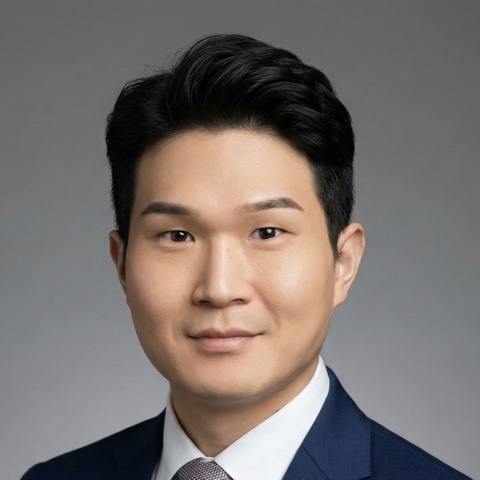 Robin Chen14 min read
When I started thinking about the name of this website, I initially considered doing what most people would probably do: simply using my own name. Robin Chen is clear enough, and there is little ambiguity about who is behind the site. But after spending years moving between technology, products, entrepreneurship, and investment, I found myself wanting something more than a personal homepage. I wanted a name that could describe not only who I am today, but also the way I intend to keep learning, thinking, and making decisions in the years ahead.
That is how I arrived at two Chinese characters connected by a simple word: 知与思.
In English, I use ZHIYU. The domain is zhiyu.si. The English expression underneath it is Know · Think · Build.
The three ideas are closely related, but they are not the same. To know is to understand the world as it is. To think is to develop your own judgment about what that understanding means. To build is to take those ideas into reality and allow reality to test them. For me, that sequence is more than a slogan. It describes a way of working that has gradually emerged from my own experience.
知:More Than Knowing
The first character, 知, is about knowledge, but I do not mean knowledge as the accumulation of facts. There is a meaningful difference between knowing something and understanding it. You can learn how a technology works without understanding why it matters. You can learn how to build a product without understanding why anyone should use it. You can understand how a business operates without understanding what gives it a durable advantage. And you can spend many years gaining experience without necessarily becoming better at making decisions.
What interests me about 知 is therefore not the idea of knowing everything. It is the process of understanding.
My own path through technology has made this distinction increasingly obvious. Early in a technical career, competence is often measured by how much you can do: how many systems you can operate, how quickly you can solve a problem, how many tools you know, or how well you can deal with an incident when something breaks. Those abilities matter, but over time the more important questions change. You begin to ask why a system was designed that way in the first place, whether the complexity is necessary, what the business actually needs, and whether solving the immediate technical problem is even the right problem to solve.
The same thing happens when moving closer to products and business. A technically impressive product can still fail because it solves a problem that nobody considers important. A well-designed feature can remain unused. A sophisticated architecture can create more cost and operational burden than value. A business can grow quickly without necessarily becoming stronger. The more different environments you work in, the harder it becomes to believe that any single discipline has all the answers.
That is why I think of 知 as a continuing process rather than a destination. It is the willingness to look beyond the surface of a problem and understand the system underneath it: the technology, the people, the incentives, the economics, the constraints, and the context. It is also the recognition that what I understand today will probably be incomplete tomorrow.
In that sense, 知 is deliberately humble. It does not say that I know. It says that I am trying to know better.
思:When Knowledge Becomes Judgment
Knowing, however, is not enough. The second character is 思.
If 知 is the process of understanding, 思 is the process of deciding what that understanding means.
This distinction has become more important in a world where information is abundant. The internet has made knowledge easier to access than at almost any other point in history, and artificial intelligence is accelerating that trend even further. We can retrieve information, compare alternatives, summarise complex material, generate code, analyse documents, and explore unfamiliar subjects almost instantly.
As information becomes cheaper, judgment becomes more valuable.
The difficult questions are increasingly not “What information can I find?” but “Which information matters?”, “What should I believe?”, “What assumptions am I making?”, and “What evidence would cause me to change my mind?” These questions cannot be solved simply by collecting more data. They require reflection, context, experience, and the willingness to examine your own reasoning.
That is what 思 represents for me.
Experience helps, but experience by itself does not guarantee good judgment. It is possible to repeat the same mistake for ten years and call it experience. It is also possible to become so confident in what worked in the past that you fail to notice when the environment has changed. Thinking requires a certain distance from your own assumptions. It requires being able to separate what you know from what you merely believe, and to recognise that a conclusion that once made sense may no longer make sense under different conditions.
Writing has become one of the ways I do this. When an idea exists only in your head, it can feel much more coherent than it really is. Once you try to explain it clearly, assumptions become visible, contradictions become harder to ignore, and vague intuition has to become an actual argument. This is one reason I want this website to contain essays rather than simply a collection of announcements or achievements. Writing is not only a way of communicating what I think. It is a way of finding out what I actually think.
This is also why I considered 智与思 but eventually rejected it. 智 is a powerful and beautiful character. It carries ideas of intelligence, wisdom, and judgment, and it would certainly make sense for someone working in technology and AI. But there is a subtle difference in what the two names imply. 智 sounds more like a quality that has already been acquired; 知 feels more like an ongoing process. I do not want this site to present wisdom as something I already possess. I would rather document the pursuit of understanding and better judgment.
That distinction is important to me because I expect to change my mind.
Changing your mind after learning something new is not necessarily inconsistency. Sometimes it is evidence that the learning actually worked.
Build:The Test of Reality
There is still a danger in knowing and thinking. Both can become an intellectual exercise.
You can spend years reading, analysing, discussing, and refining your opinions without ever allowing those opinions to encounter reality. At some point, an idea needs to become something that can be used, rejected, measured, operated, or challenged. That is where Build enters the picture.
Building has always been an important part of how I learn. A system teaches you things that architecture diagrams cannot. A product teaches you things that a product requirements document cannot. A business teaches you things that a strategy presentation cannot. Reality introduces constraints that theory can conveniently ignore.
When something is actually built, assumptions become visible. Users behave differently from what you expected. Costs appear where you did not anticipate them. A technical shortcut becomes an operational problem. A feature that looked essential turns out to be irrelevant. A small detail that seemed unimportant becomes the reason people keep using the product.
This is why I do not see building as the final stage of the process. It is part of the learning loop.
Know → Think → Build → Learn again.
You learn something about the world. You form a view. You build something based on that view. Reality gives you feedback. That feedback changes what you know, which changes how you think, which changes what you build next.
The loop is more important than any individual result.
Not everything I build will succeed. Some things will fail because the idea was wrong. Some will fail because execution was not good enough. Some will simply arrive at the wrong time. But even failure can produce something valuable if it improves the model you use to make the next decision.
Reality is a very effective editor.
It removes ideas that only sounded good in your head.
Why This Fits My Path
Looking back, my career can be described from the outside as a movement from Technology → Product → Entrepreneurship → Investment. But it did not feel like a carefully designed sequence when I was living through it. Each stage emerged partly because the previous one created new questions.
Technology taught me how systems work and how much complexity can hide underneath something that appears simple. Working with products introduced a different question: even if something can be built, should it be built, and for whom? Entrepreneurship added another layer: a product needs customers, distribution, economics, people, and timing. Investment added another perspective: every decision involves capital, uncertainty, opportunity cost, incentives, and time.
These are different fields, but they influence each other.
Technology changes how I evaluate products. Product experience changes how I evaluate businesses. Entrepreneurship changes how I think about investment. Investment changes how I think about time and capital allocation. And all of those experiences change how I think about technology again.
That is why I am reluctant to define myself too narrowly.
I am interested in technology, but I am not only a technologist. I care about products, but I am not only a product person. I build companies and projects, but I do not want entrepreneurship to become a performance of being an entrepreneur. I invest, but I do not want this site to become an investment newsletter.
The common thread is not a job title.
It is the process of understanding, forming judgment, and acting on that judgment.
That is the role 知与思 plays in my identity.
Why Not 知遇思
I also considered 知遇思.
There is something attractive about it at first glance. It has a literary quality, and the characters have a certain rhythm. But Chinese readers naturally recognise familiar word structures, and 知遇 is already an established expression. It commonly refers to being recognised, appreciated, or treated favourably by someone, especially in the phrase 知遇之恩.
That means a reader may naturally parse 知遇思 as “知遇 + 思” rather than immediately understanding the intended relationship between 知 and 思. The name would therefore require explanation before its intended meaning became clear.
I prefer a name that becomes more meaningful when you think about it, not a name that needs to be explained before it can be understood.
知与思 is deliberately simple. The relationship is visible in the name itself: knowing and thinking, understanding and judgment. The “与” also gives the name a sense of openness. It does not claim that thinking ends when knowledge begins, or that building is separate from either one. It simply places the two ideas next to each other and leaves room for the rest of the cycle.
There is a useful ambiguity in that simplicity. The name can describe a method of working, a philosophy of learning, or simply the kind of things I want to write about. It does not need to be reduced to one profession or one industry.
Why ZHIYU
The English name ZHIYU is not intended to be a literal translation of “知与思”. It is the romanised identity of the Chinese name, while Know · Think · Build is the English expression of the idea behind it.
I like keeping these layers separate.
The Chinese name carries cultural and philosophical meaning that is difficult to reproduce perfectly in English. “Knowledge and Thinking” is technically accurate but feels academic and static. “Know and Think” is closer to the original structure but still does not carry the same character of the Chinese phrase.
ZHIYU works differently. It allows the Chinese name to remain itself while giving it a form that can exist naturally in an international context.
That matters to me because my work has never been limited to one geography. Technology is global, products cross borders, companies operate across markets, and ideas increasingly move between cultures. I do not want the international side of the identity to require abandoning the Chinese side of it.
知与思 · ZHIYU is therefore intentionally bilingual rather than translated.
The Chinese name is the meaning.
ZHIYU is the identity.
Know · Think · Build is the principle.
The Small Easter Egg in .si
There is one more reason I like the domain zhiyu.si.
Officially, .si is the country-code top-level domain for Slovenia. That is its formal meaning, and it does not need another explanation.
But I also like a second, much more contemporary reading:
SI — Super Intelligence.
As artificial intelligence develops toward systems with increasingly broad reasoning and agency, “Super Intelligence” has become one of the phrases associated with the next stage of the technology. I wanted the .si to carry a quiet reference to that future.
But there is an important distinction here: I do not want “Super Intelligence” to become the primary story of ZHIYU.
That would make the brand too dependent on the current AI cycle.
AI is one of the most important technological developments of our time, and it will influence how software is built, how knowledge is produced, how companies operate, and perhaps how economic value is created. But my interests are broader than AI, and I expect them to remain broader.
The .si is therefore an Easter egg rather than a positioning statement.
If someone visits zhiyu.si and never notices it, nothing is lost. The name still works. If someone notices it and asks about it, there is another layer waiting underneath.
I like that kind of detail.
The best Easter eggs do not interrupt the main story. They reward attention.
There is also a connection between the two ideas that I find increasingly interesting. 知与思 is fundamentally concerned with understanding and judgment, while Super Intelligence points toward a future in which machines may become extraordinarily capable at information processing and reasoning. As machines become better at producing answers, the human questions may become more important rather than less important: What should we ask? What should we believe? What should we build? Which decisions should we delegate? Which decisions should remain ours?
The more powerful intelligence becomes, the more important judgment may become.
That is why I prefer the .si to remain quietly at the end of the domain. It points toward the future without allowing the future to define the identity.
A Name That Can Age
One of the easiest mistakes in personal branding is choosing a name that describes what you are doing today too precisely.
It can work perfectly for a few years and then become a constraint.
I wanted the opposite for ZHIYU.
I do not know exactly what I will be building ten years from now. The next project may be software, a company, an investment, a product, or something that I cannot currently predict. My interests will probably change as I gain more experience, and some of the opinions I hold today will almost certainly change with them.
A durable name needs room for that.
As long as I remain interested in understanding the world, forming my own judgment, and turning some of those ideas into reality, 知与思 remains relevant.
That is enough.
What I Want This Website to Become
I do not want zhiyu.si to become a content machine.
The internet already has more content than anyone can consume. There is constant pressure to publish more frequently, react more quickly, and turn every thought into a post. That model makes sense when the objective is reach or engagement. It is less interesting to me when the objective is building a durable body of work.
I would rather publish something that remains useful after the original context has disappeared.
Some articles here will be technical. Others will be about products, entrepreneurship, investing, management, or the decisions that connect those areas. Some will probably be personal. There will also be subjects where I am not certain of the answer and am writing precisely because I want to understand them better.
I do not expect everything I publish to remain correct forever.
In fact, I would consider it a problem if nothing ever changed.
A personal archive should contain the evolution of a person, not just the final version of their opinions. Looking back at an old piece and realising that you would write it differently today is not necessarily a failure of the old piece. Sometimes it is evidence that the years between the two versions taught you something.
This is also why I want the site to remain relatively quiet. I am not trying to turn every experience into a lesson, and I do not want every project to become a case study. Some things are better left private. What makes it here should have a reason to exist beyond the moment when it was published.
The goal is not volume.
It is accumulation.
Over time, I hope these articles and projects form something closer to a body of work than a blog.
A Record of Becoming
There is a final reason this name matters to me.
A résumé tells people what you have done. A portfolio shows what you have made. A social profile tells people what you currently want them to see.
None of them necessarily explain how you became the person behind them.
I want this website to preserve some of that missing layer.
The decisions that worked, as well as the ones that did not. The technical problems that changed how I think. The products that taught me something about users. The businesses that changed how I understand value. The investments that taught me about patience, risk, and time. The assumptions that seemed obvious until reality proved otherwise.
These experiences are difficult to compress into a professional biography, but they are often more valuable than the biography itself.
That is what I mean by a body of work.
Not a monument to achievements, and not an attempt to construct a perfect image of myself, but a record of what I knew, what I thought, what I built, and what those things taught me.
If the site still exists ten or twenty years from now, I hope I can read the earliest pieces and recognise the person who wrote them, while also being able to see how much has changed.
That would be a good outcome.
Know · Think · Build
So after considering different names, different interpretations, and different ways of presenting this identity, the answer became quite simple.
知与思 · ZHIYU.
The idea is not that knowledge makes you wise, or that thinking automatically makes you right. It is that a meaningful career and a meaningful body of work are built through a continuous cycle: understand something, examine it carefully, act on it, learn from the result, and begin again.
知 is the attempt to understand the world.
思 is the discipline of forming your own judgment.
Build is the willingness to let reality test that judgment.
And then the cycle starts again.
I do not know exactly where it will lead. I do not think I need to know.
A useful framework should give you a direction without pretending to know the destination.
For now, this is the framework I want to keep.
To know more, without confusing information with understanding. To think more carefully, without becoming attached to being right. To build more, because reality is ultimately the best test of an idea. And to leave enough room for the next question, the next project, and the next version of myself.
That is what 知与思 means to me.
And that is what I hope zhiyu.si becomes: a place to know, a place to think, and, eventually, a record of what I chose to build.
Know · Think · Build